Malaysia Consumer Day 2013 (HPM 2013)

Malaysia Consumer Day 2013 is just around the corner! Let’s celebrate it by participating in 11 competitions held in the national level.

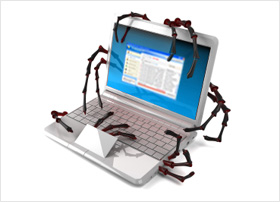
SWITCH!: National Energy Efficiency Awareness Campaign

SWITCH! is an effort by Non-Government Organisation (NGO) with the support from government and industries to increase the awareness on importance of ‘efficiency’ in the usage of energy and to play our roles and responsibility together with the government.

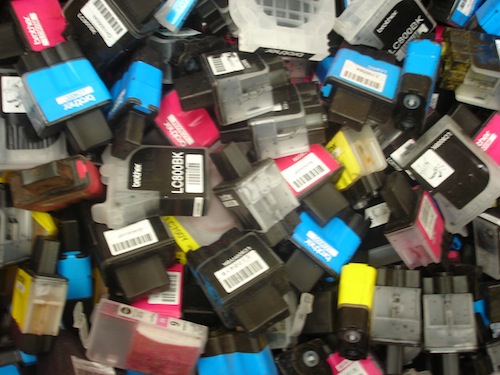
Do You as Consumer Aware Enough?

Learn more about consumer and consumerism by clicking on the picture.

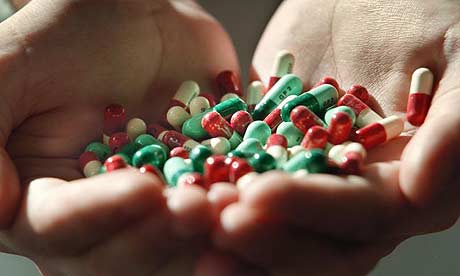
Danger of Counterfeit and Fake Products

Dou you know counterfeit is really a serious problem to the world? Find out more about counterfeit by clicking on this picture.

Federation of Malaysian Consumers Associations (FOMCA)

FOMCA is a national non-govermental organization, which is the umbrella body of registered consumer associations in Malaysia. Find out more at their website.

Showing posts with label Anti-Counterfeit. Show all posts

Tuesday, July 16, 2013

Concerns About Counterfeit Foods


A new report suggests that you might not be getting what you're paying for.

Watch this video that has been aired by ABC News on January 2013.

Source

Monday, July 15, 2013

Seizures of Counterfeit Foods in Yemen

Since the beginning of the year 2013, more than 57 tons of expired and counterfeit food products, cosmetics and medicines have been destroyed, said Khalid Al-Khwlani, the director of the Industry and Trade office in Sana’a to Yemen Times. There have been 581 documented violations; 522 have been referred for prosecution, he said. 

Eight ice-cream factors in the Dar Salm area have been closed for not meeting safety standards.

“We have established sub-committees in each district to periodically inspect shops and markets until the end of Ramadan,” said Al-Khwlani.

With a weak economy, people are increasingly turning to street vendors and markets for cheaper goods. The influx of people is resulting in more demand for goods, leading to more expired and counterfeit products, said the director of the Consumer Protection Authority, Ali Abdulaziz Al-Haj.

The Capital Secretariat confiscated nearly 50,000 packs of counterfeit chewing gum in Al-Sonaina shopping center in Sana’a. The owner of the shopping center was fined YR 400,000, about $1900.

Counterfeit goods aren’t limited to developing nations such as Yemen. The New York Times recently published an article about the phenomenon: Counterfeit Food More Widespread Than Suspected.

“Around the world, food fraud is an epidemic — in every single country where food is produced or grown, food fraud is occurring,” said Mitchell Weinberg to The New York Times. “Just about every single ingredient that has even a moderate economic value is potentially vulnerable to fraud.”

on 8 July 2013 in Yemen Times

Sunday, July 7, 2013

How to Identify a Counterfeit Medicine


Today, more people than ever put their health in danger by purchasing counterfeit medicines. Up to 15% of all drugs sold worldwide are fake, and in some parts of Africa and Asia the figure exceeds 50%.

Consumers should be aware about the medicine they take, either real or fake. These are several ways to recognize counterfeit medicine; as stated by Bupa International:
  • Spot the difference. Is the lettering on the packaging hazy and printed flat (rather than raised), or is the expiry date missing?
  • Read carefully. Are the labelling and patient information in a language you understand? If there are misspelled words, contact the manufacturers – it can be a telltale sign.
  • Use your senses. Is the medicine the same size, shape, texture, colour and taste as your previous prescription?
  • Feel for consistency. When you handle the drug does it fall apart easily? If so, it could signal a fake.
  • Do a price check. Does the cost of the drug seem very cheap in comparison with your official provider? If it’s much lower, it could be a scam.

Friday, July 5, 2013

Are Fake Prescription Drugs Killing Us?


"What would have cost tens of thousands of dollars...can now be done for hundreds of dollars, so it's easier to fake stuff now," warns Roger Bate, resident scholar at the American Enterprise Institute (AEI) and the author of "Phake: The Deadly World of Falsified and Substandard Medicine."
Counterfeit, adulterated, or otherwise compromised prescription drugs are a major problem in Africa and a growing problem in the First World, argues Bate. In recent years, counterfeiters passed off hundreds of thousands of phony Lexapro pills around the globe and in 2008 at least 149 Americans died from fake Heparin, a blood-thinning drug. All told, says Bate, the number of deaths globally from ineffective drugs ranges from 100,000 to 1 million.

As drug production moves to China and other developing nations where oversight is tougher to maintain and more sales take place online where provenance can be tougher to ascertain, Bate says that the most viable solution is increased vigilance on the part of drug makers, providers, and patients alike. He looks forward to a fast-approaching world in which hand-held spectrometers verify pills on the spot and praises various online-pharmacy certification programs.
Referring to the classic 1949 film, "The Third Man," in which Orson Welles plays a drug counterfeiter whose watered-down penicillin in post-war Europe leads to the death of several children, Bate gives Hollywood credit for being well ahead of the curve on putting the spotlight on what he calls "the 2nd oldest profession."

Wednesday, July 3, 2013

The fight against counterfeit drugs


60 Minutes' nine-month investigation of counterfeit prescription drugs reveals how the dangerous and sometimes deadly fakes get into the nation's drug pipeline. Dr. Sanjay Gupta reports.


Tuesday, July 2, 2013

Control and Reporting Counterfeit Medicine In Malaysia

Control
The Ministry of Health has imposed the use of security label hologram (picture 1) to all medicinal products since September 2005. This is to prevent and control counterfeit products assessing the Malaysian market. Medicinal product with genuine MeditagTM hologram is considered genuine and medicinal product with fake hologram or without the MeditagTM hologram is considered counterfeit and unregistered. The authenticity of the MeditagTM hologram can be examined by the public in all community pharmacies in Malaysia using Decoder MeditagTM (picture 2). 

alt
Picture 1: Meditag Hologram

alt
Picture 2: Meditag Decoder

alt
Picture 3: Verifying the authenticity of the Meditag hologram in pharmacy

alt
Picture 4: Example of counterfeit medicine (with & without Meditag Hologram)

Reporting
If a medicine is suspected to be illegal or counterfeited, publics are advised to stop taking and seek medical advice should they fell unwell. They can report the incident to their pharmacist or doctor who will then inform the Ministry of Health accordingly. Alternatively they may report directly to the:

Pharmaceutical Services Division,
Ministry of Health, Malaysia,
Lot 36, Jalan Universiti,
46350 Petaling Jaya.
Tel: 03 7841 3200
Fax: 03 7968 2251 or

Public can visit the Pharmaceutical Services Division official web sites, www.pharmacy.gov.my for further information.

Source: MyHealth Ministry of Health Malaysia

Monday, July 1, 2013

What Is Counterfeit Medicines?


Introduction
Counterfeit medicines are found everywhere in the world ranging from random mixtures of harmful toxic substances to inactive and ineffective preparations. Some contain a declared, active ingredient and look so similar to the genuine product that they deceive health professionals as well as patients. But in every case, the source of a counterfeit medicine is unknown and its content unreliable. Counterfeit medicines are illegal in Malaysia. They can result in treatment failure or even death. Eliminating them is a considerable public health challenge.

Definition
The World Health Organization (WHO) defines counterfeits medicines as:
"medicines that are deliberately and fraudulently mislabelled with respect to identity and/or source. Both branded and generic products are subject to counterfeiting. Counterfeit medicines may include products with the correct ingredients or with the wrong ingredients, without active ingredients, with insufficient or too much active ingredient, or with fake packaging".

As for Malaysia, there is no specific definitions on counterfeits medicines, however the legislation for counterfeit products are well covered under The Trade Act. According to The Sales and Drug Act 1952: Regulation 7(1)(a), 7(1A)(a-g) of the Control of Drugs and Cosmetic Regulation (CDCR) states that all medicinal products must be registered with National Pharmaceutical Control Bureau (NPCB) Ministry of Health before being marketed. All registered medicinal products will be given a unique registration numbers.

Products with the following criteria are considered unregistered medicinal products which include the counterfeit medicinal products:-

(i) if they bear
  • No registration number
  • False registration number
  • Registration number belonging to other products
  • Registration number which has been cancelled
  • No safety label hologram Meditag TM
  • False hologram Meditag TM
  • Ingredient which differ from the original formula during registration
  • A mixture of 2 registered products
  • Information on the packaging which differ from the approved version
(ii) if they contain Adulterants

Thursday, June 27, 2013

Checking a Fake Banknote

You might had visited the post on Detecting a Counterfeit Banknote but the article seems a lot of words and may irritate some of word-o-phobia (really?).

So we brought to you the video version which is more interactive and attractive, produced by lunaticg blog. The money used here is Malaysia Ringgit (MYR) 100.
Here you go:


Wednesday, June 26, 2013

How to Differentiate or Identify Counterfeit Notes using Banknote Detector

How to spot fake money?  How to check and confirm forgery notes?
Here are some useful tips to identify counterfeit RM50 notes; brought to you by Nibo Corporation Sdn Bhd.
*RM/MYR stand for Ringgit Malaysia


Overall paper reflection of UV light
 ( means real banknote, X means fake banknote)

Security vertical strip does not differentiate the real and fake banknotes
Deer head reflection (real banknote)
Deer head reflection (fake banknote)

Serial number reflection (fake banknote)
Serial number reflection (real banknote)

Saturday, June 22, 2013

Counterfeit Goods by ThinkBe4U

Follow some simple advice when shopping online to ensure you receive the product that was pitched.


ThinkB4U is a project collaboration between Google Inc. and expert safety partners Common Sense Media, ConnectSafely, and the National Consumers League. The project is tackling some of the biggest learning curves thrown at the average user in a fun and interactive way.

Friday, June 21, 2013

Counterfeit HP Printing Supplies Worth Almost $200,000 Seized in Malaysia


May 8, 2013 - MALAYSIAN law enforcement officers seized 80 counterfeit ink cartridges and more than 2,000 counterfeit toner cartridges worth more than RM540,000 (US$182,250) in Kuala Lumpur recently, Hewlett-Packard said in a statement.

The ‘entity’ found with the fake products was involved in the sale and distribution of counterfeit HP materials to commercial businesses in Kuala Lumpur, the company said.

There were no arrests made but a follow-on investigation to identify the entity’s downstream customers, upstream suppliers and any related facilities is underway, it added.

A counterfeit product is a product which has been made to look identical to or substantially indistinguishable from the genuine or original product, usually for the purpose of deceiving customers.

The counterfeiting of printing supplies usually involves the illegal printing of HP-branded boxes, labels and security seals. Often refilled cartridges containing inferior inks and toners are used and inserted into this packaging that closely resembles genuine HP packaging. The counterfeit cartridges are ultimately purchased by customers who believe them to be genuine.
 
“HP appreciates the commitment and support of the Malaysian authorities in protecting consumers and businesses against the illegal actions of counterfeiters, who deceive customers into thinking they are buying genuine goods,” said Jimmy Kwok, anti-counterfeit manager, Printing and Personal Systems, HP Asia Pacific and Japan.

“Counterfeit print cartridges run several risks, ranging from substandard print quality to printer downtime due to damage by inferior counterfeit supplies,” he claimed.

HP said its anti-counterfeiting programme in the Asia Pacific region has resulted in law enforcement agencies successfully confiscating more than 25 million units of counterfeit cartridges and components in the last four years.

On a global level, HP maintains an aggressive approach to anti-counterfeiting and has conducted more than 4,600 investigations in 88 countries over the last four years. This has resulted in the seizure of more than 36 million units of counterfeit printing cartridges and components worldwide.

All HP cartridge packaging in the Asia Pacific region displays a security seal with colour-shifting technology that helps customers easily identify genuine HP supplies. To visually verify that the label is valid, customers should tilt the box front to back to see “OK” and “ ” move in opposite directions. When the box is titled right to left, they should see OK” and “ ” move in the same direction.

HP has also introduced security seals with QR codes, allowing for Mobile Authentication with the QR code reader on customers’ mobile device.

Customers can learn more about how to use this security seal as well as other best practices to avoid purchasing counterfeit cartridges at www.hp.com/apac/nofakes.

Source : Digital News Asia
Read more : The Recycler

Thursday, June 20, 2013

Counterfeit Production Facility

Trademark counterfeiting is a very serious problem with many consequences that most people don't understand.

Take an inside look at a counterfeit operation and see first a counterfeit factory in action.

Avoid Counterfeit Check Scams


Unwitting consumers are falling for a new twist on the old “advance fee scam.” In this variation, a consumer receives what looks like a legitimate check in the mail, either as “foreign lottery proceeds,” “prize money,” or even payment for goods via classifieds (which includes Craigslist and eBay). 

The scammer requests that you send back a portion to pay for fees or handling charges, or says they “overpaid” and need you to pay back the difference. The check clears when deposited in the bank. A few days later, the check bounces and the thief has got whatever the rube sent them.

The US Federal Trade Commission advises:
  • Don’t wire money to strangers.
  • Throw away offers that ask you to send back money for your “free” gift.
  • Only accept checks from people you trust.
— BEN POPKEN

Fake Britain: Counterfeit Goods


From his 'Fake House' stuffed with counterfeit goods, presenter Dominic Littlewood reveals the extent of fake goods in the UK.

We investigate the tragic tale of seven-year-old Connor O'Keefe who was electrocuted and died after using a fake power charger for his electronic game. Fake electricals are produced in the Far East but are potentially lethal. Fake Britain examines fake fuse boxes which are tested with alarming results.

There's a look at the fake mini motorcycles that endangered the lives of the children they were bought for, and the case of the company which bought non-organic food, rebranded it as organic and made a small fortune.

Customs and Excise officers search a high street shop and find thousands of fake cigarettes, before uncovering an audacious plan to smuggle fake cigarettes from China into the country hidden in huge fans, while Trading Standards and Customs officers shut down a fake vodka distillery and find hundreds of bottles of fake vodka on sale. We even see how good old British cod and chips is being faked in fish shops by using a much cheaper fish from Vietnam.

Wednesday, June 19, 2013

Syndicate of Fake Printer Cartridge Busted


SHAH ALAM, June 18 2013 : The Domestic Trade, Cooperatives and Consumerism Ministry's Selangor branch has busted a syndicate that buys and re-sells fake printer cartridges.

Its enforcement chief Othman Nawang said an enforcement team raided three premises, a factory, a shop and a house in Section U5 here today.

He said 3,252 fake cartridges of various brands such as HP, Brother, Samsung, and Canon, as well as a compressor machine and cartridge machine cleaner worth a total of RM500,000 were seized during the raid based on a tip-off from a printer company.     

"Two local workers in their 20s were also detained at the factory," he told reporters here.

Othman said the suspects allegedly bought the cartridges for between RM5 and RM12 per unit and re-sold them for between RM50 and RM180 each.

Source : News Straits Times

Steps to spot counterfeit goods and avoid buying them


When you go for shopping at hypermarket, or shops or flea market or even online shopping, do you know the steps that you can follow so that you could avoid counterfeit stuffs?

These are the steps to spot counterfeit goods and avoid buying them as outlined by the United States Patent and Trademark Office (USPTO) :

1. Scrutinize the labels, packaging, and contents of goods.
2. Seek authorized retailers.
3. Look for missing sales tax charges.
4. Insist on secure transactions.
5. Know the actual cost of the goods.
6. Familiarize yourself with the appearance of the product and where it is sold.
7. Examine the workmanship and quality of the goods.

Learn more through the USPTO video:


Tuesday, June 18, 2013

MOH received the Global Anti-counterfeiting Awards 2013


The Ministry of Health Malaysia (MOH) has been accorded an international recognition with the presentation of the “Global Anti-Counterfeiting Award 2013” in the public sector category by the Global Anti-Counterfeiting Group Network (GACG). GACC is an international anti-counterfeit organization based in London, UK.

The award was presented in conjunction with the World Anti-Counterfeiting Day organized by Union des Fabricans in Paris, France on the 28th of May 2013. The Senior Director of Pharmaceutical Services Division, Dato’ Eisah bt. A. Rahman, received the award on behalf of the Ministry of Health Malaysia.

The recognition is given based on the exceptional efforts and initiatives of Ministry of Health Malaysia has taken in protecting the public from dangerous and counterfeit medicines.

Various efforts based on policies and operations have been successfully implemented, including a strong political commitment, robust legislation, a comprehensive regulatory system for medicines registration, effective use of MeditagTM security holograms, continuous enforcement activities and embarking in consumer awareness campaigns throughout Malaysia. The implementation of the MeditagTM since 2005 as an important tool for product authentification has shown positive impact in combating counterfeits in Malaysia.

Source

Monday, June 17, 2013

A Counterfeit Encounter

This is the video of Channel One News' Jessica Kumari who takes viewers inside the fake goods trade.


The video is available on Channel One News' Youtube Channel since April 26, 2010.

Jessica's report focused on counterfeit handbags being sold in New York City's Chinatown -- and one of the biggest "knockoff" markets out there is for designer handbags. However, in addition to being illegal, you should know that when you buy a fake designer handbag, the people who made that bag are likely earning very little money for their work. They may even be children working in sweatshops.

Another problem associated with counterfeiting: The workers employed in these factories may work in harsh conditions. Their employers are not only stealing someone else's intellectual property, they are not likely to be ethical business people either. The profit they make could be tied to illegal drugs, human trafficking and even terrorism.

Detecting and Avoiding Fake Anti-Virus Software


Your Computer Is Infected with Malware!
Click here to purchase recommended anti-virus software!

You may be familiar with this or similar messages urging you to take action purportedly designed to clean your allegedly infected computer. Unfortunately, these messages are often scams that attempt to install malicious software (malware) onto your computer. Such software is referred to as rogue (fake) anti-virus software. Last year, the FBI reported an estimated loss to victims in excess of $150 million from this type of scam.

How can my system get infected?

These types of scams can be perpetrated in a number of ways, including via website pop-up messages, web banner advertisements, spam and postings on social networking sites. Scams are also appearing via the use of "tweeting." The rogue anti-virus software scam generally uses social engineering to make the user believe his or her machine is infected and that by taking action (clicking on the link provided) the machine will be cleaned. If you click on the malicious link, you may be downloading malware onto your machine. The names of the fake programs sound legitimate, and often, in a further attempt to make the malware appear legitimate, the programs may prompt you to pay for an annual subscription for the fake software.

Some varieties of rogue anti-virus programs will also get installed on your machine without any interaction by you. Your machine could be compromised just by you visiting a website with a malicious ad or code.

What is the impact from rogue anti-virus software?

Rogue anti-virus software might perform many activities, including installing files to monitor your computer use, steal credentials, install backdoor programs, and add your computer to a botnet. The installation of malware could result in a high-jacked browser (i.e., the browser navigates to sites you did not intend), the appearance of new or unexpected toolbars or icons and sluggish system performance. Additionally, another concern related to rogue anti-virus software is the false sense of security you may have, erroneously believing your machine is protected by anti-virus software when in fact it is not.

What can I do to protect my computer?

Applying computer security best practices will help protect your machine and minimize any potential impacts.
  1. Don't click on pop-up ads that advertise anti-virus or anti-spyware programs. If you are interested in a security product, don't try to access it through a pop-up ad; contact the retailer directly through its home page, retail outlet or other legitimate contact methods.
  2. Don't download software from unknown sources. Some free software applications may come bundled with other programs, including malware.
  3. Use and regularly update firewalls, anti-virus, and anti-spyware programs. Keep these programs updated regularly. Use the auto-update feature, if available.
  4. Patch operating systems, browsers, and other software programs. Keep your system and programs updated and patched so that your computer will not be exposed to known vulnerabilities and attacks.
  5. Regularly scan and clean your computer. Scan your computer with your anti-virus and anti-spyware on a regular basis.
  6. Back up your critical files. In the event that your machine becomes infected, having backups of your important files will facilitate recovery.

NOTE: Regarding the above recommendations, many organizations have formal processes that automatically update and patch appropriate software, scan computers and perform file back-ups. In these cases, no end user action is necessary.

For more information, please visit:

Saturday, June 15, 2013

World's Largest Counterfeit Cartridge Bust in UAE

 
As published
Ajman police raided a company and arrested some Chinese dealers involved in the production of fake HP printer ink cartridges worth nearly Dh280 million ($76 million/€57 million), the world’s largest amount of counterfeit ink to be seized.

Police raided the massive warehouse which operated under the cover of carpet production following a complaint by HP in the UAE.

Newspapers said all the forged cartridges carried HP trademark and that police also seized equipment for filling and forging the trade mark as well as printers and laser systems used in copying the original company’s production code.

Police said the arrested Chinese live legally in the UAE and own one company, two warehouses and one villa in Ajman and one store in Dubai.

“It was the largest fake ink cartridge in the world to be seized by the police,” sai9d Brigadier Sheikh Sultan Al Nuaimai, Ajman’s deputy police commander.

He said those involved could be either jailed or fined between Dh5000 ($1,300/€1,000) to Dh10,000 ($2,700/€2,000), adding that there is a need to introduce tougher penalties in such crimes.

Twitter Delicious Facebook Digg Stumbleupon Favorites More