Malaysia Consumer Day 2013 (HPM 2013)

Malaysia Consumer Day 2013 is just around the corner! Let’s celebrate it by participating in 11 competitions held in the national level.

SWITCH!: National Energy Efficiency Awareness Campaign

SWITCH! is an effort by Non-Government Organisation (NGO) with the support from government and industries to increase the awareness on importance of ‘efficiency’ in the usage of energy and to play our roles and responsibility together with the government.

Do You as Consumer Aware Enough?

Learn more about consumer and consumerism by clicking on the picture.

Danger of Counterfeit and Fake Products

Dou you know counterfeit is really a serious problem to the world? Find out more about counterfeit by clicking on this picture.

Federation of Malaysian Consumers Associations (FOMCA)

FOMCA is a national non-govermental organization, which is the umbrella body of registered consumer associations in Malaysia. Find out more at their website.

Showing posts with label consumers. Show all posts

Sunday, September 1, 2013

These Fancy Food Are Fraud!


Taken from Frugal Dad, he advices to not believe everything you eat.

Good frugal sense will tell you to approach spendy purchases with thoughtful hesitation, but, in this case, that seems easier said than done. The fact of the matter is, unless a product is truly transparent about its contents (not especially easy to determine), you could be wasting your money on overpriced cons.

Here you go, the infographic on these fake fancy food:

Monday, July 15, 2013

10 Counterfeit Food Products Usually Consumed

Most perspicacious shoppers might guess that a pile of supposed Louis Vuitton handbags being hawked by a shady sidewalk vendor for $20 a pop are probably not authentic. But how about a lovely-looking bottle of extra-virgin olive oil on the shelf of the supermarket? Even the most shrewd of shoppers might not suspect that behind the label lurk 12 ounces of, say, humdrum corn oil. Welcome to the world of food fraud.

While a knockoff purse may pose little more harm than embarrassment upon its discovery, phony food can be a cause for concern. It can lead food allergy sufferers dangerously astray. As well, some items being used aren’t meant for human consumption, while others contain toxic components such as lead or melamine. While the list of foods on the database is extensive, here are some of the most commonly-consumed ones to be on the lookout for.

1. Orange juice

What could be complicated about orange juice? It is made from oranges, juiced — except when it’s not. That some juice makers feel compelled to regularly pump up their product with non-orange ingredients seems farfetched, but they do it. And in fact, orange juice is one of the most popular items to have suspect ingredients sneaked into the mix. The FFD is chock full of faux orange juices, one of the most shocking reveals a mixture of beet sugar, corn sugar, monosodium glutamate, ascorbic acid, potassium sulfate, orange pulp wash, grapefruit solids, and a byproduct from a water distillation system.

2. Honey

Honey is one of the most commonly mislabeled foods, representing 7 percent of food fraud cases. Last year, Food Safety News tested honey and found that 75 percent of store-bought honey didn’t contain pollen. People are still buying a product made from bees, but with no pollen food regulators are unable to identify the honey’s source. Consequent testing found that a third of all phony honey was imported from Asia and was contaminated with lead and antibiotics.

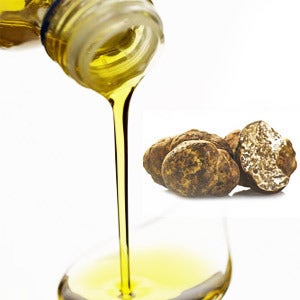
3. Truffle oil

This one comes as a shock to any self-respecting foodie upon its discovery. The fancy truffle oil that home chefs and beloved restaurants drizzle across pizza, pasta, and salads … isn’t flavored with real truffles. No, most commercial truffle oils are created by mixing olive oil with a synthetic petroleum-based flavoring agent, commonly 2,4-dithiapentane. Real truffle oil may be hard to find, but check the label for truffle “aroma” or “essence” to spot the imposter oils.

4. Blueberries

Berries, and blueberries in particular, have become a superfood darling and consequently, commonly faked – there’s a pretty lengthy list of retail food items that contain words or photos suggesting that real blueberries were used in the products, when in fact, they weren’t.

The nonprofit Consumer Wellness Center reported that many "blueberries" in popular products they found were nothing more than glops of sugar, corn syrup, starch, hydrogenated oil, artificial flavors and artificial food dye blue No. 2 and red No. 40.

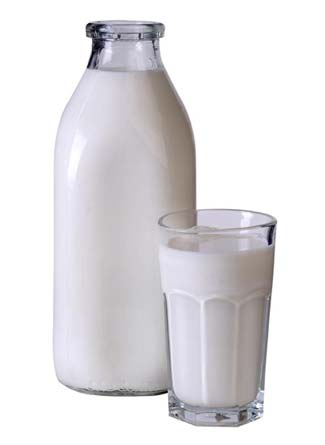
5. Milk

Milk is one of the most commonly adulterated food items out there. A look at the FFD turns up pages of search results for milk, with a nightmarish list of adulterants. For starters: Melamine, non-authentic animal sources, formaldehyde, urea, hydrogen peroxide, machine oil, detergent, caustic soda, starch, non-potable water, cow tallow and pork lard.

6. Fish

Between sustainability issues and mercury levels, many of us are obsessively diligent about the fish we buy. So it’s depressing and distressing to discover that a study by Oceana from 2010 to 2012 found that 33 percent of the 1,215 samples they analyzed nationwide were mislabeled according to FDA guidelines. The samples were collected from 674 retail outlets in 21 states.

Samples labeled as snapper and tuna had the highest mislabeling rates (87 and 59 percent); only seven of the 120 samples of red snapper purchased nationwide were actually red snapper, the other 113 samples were another fish.

At the same time, farmed fish gets sold as wild catch and scallops are sometimes stamped-out whitefish. And buyer beware: A Consumer Reports study included a "grouper" sample that was really tilefish, a fish that contains frighteningly high levels of mercury.

7. Saffron

Few spices are as exotic or expensive as saffron, and consequently, few spices are knocked off as frequently. Commonly standing in for the costly crimson threads, according to the FFD, are creative adulterants such as marigold and calendula flowers, turmeric, corn silk, poppy petals, died onions, gypsum, chalk, starch, borax and glycerine, tartrazine, barium sulfate, sandalwood dye, colored grass, and red-dyed silk fiber.

8. Olive oil

Researchers have found that olive oil is the food most vulnerable to food fraud. In most cases consumers are getting a lesser quality than what is labeled – regular olive oil instead of extra virgin, or a cheaper, non-Italian variety being sold as Italian. But olive oil is also frequently diluted with imposter oils such as hazelnut oil, corn oil, sunflower oil, peanut oil, vegetable oil, soybean oil, palm oil and walnut oil. One sample even contained lard.

In rare instances, varieties of non-food-grade oil may be added in. In one notorious case, more than 600 Spaniards died in 1981 after eating a non-food-grade, industrial rapeseed oil that was sold as olive oil.

9. Pomegranate juice

Pomegranate juice is another food category undone by its own popularity. Ever since pomegranate juice hit the market, it has been lauded for its high antioxidant content, for which consumers are willing to pay a premium. So it’s with no little amount of frustration to find that “pomegranate” juice is often diluted with grape or pear juice, sugar, and high-fructose corn syrup. There have also been reports of completely "synthetic pomegranate juice" that didn't contain any traces of the real juice at all.

10. Coffee

If you buy whole beans and grind them at home, there’s less of a chance that your morning joe has been "enhanced" with the confounding oddities that find their way into ground and instant coffee courtesy of sketchy coffee producers. The following have been found in these forms of coffee: Twigs, coffee husks, roasted corn, roasted barley, roasted soybeans, chicory powder, rye flour, potato flour, burned sugar, caramel, figs, roasted date seeds, glucose, maltodextrins, starch and roasted ground parchment.


The moral of the story? Don't be scared by all of this, but be aware. Buy whole foods when you can. Shop at trusted co-ops and farmers markets when possible. Know that well-known names and bigger brands should be somehwat reliable, since they have a lot to lose if they're busted for mislabeling. And look out for deals that seem to good to be true; that super cheap saffron could well be nothing more than died daisy petals.

Sunday, July 7, 2013

How to Identify a Counterfeit Medicine


Today, more people than ever put their health in danger by purchasing counterfeit medicines. Up to 15% of all drugs sold worldwide are fake, and in some parts of Africa and Asia the figure exceeds 50%.

Consumers should be aware about the medicine they take, either real or fake. These are several ways to recognize counterfeit medicine; as stated by Bupa International:
  • Spot the difference. Is the lettering on the packaging hazy and printed flat (rather than raised), or is the expiry date missing?
  • Read carefully. Are the labelling and patient information in a language you understand? If there are misspelled words, contact the manufacturers – it can be a telltale sign.
  • Use your senses. Is the medicine the same size, shape, texture, colour and taste as your previous prescription?
  • Feel for consistency. When you handle the drug does it fall apart easily? If so, it could signal a fake.
  • Do a price check. Does the cost of the drug seem very cheap in comparison with your official provider? If it’s much lower, it could be a scam.

Sunday, June 23, 2013

Consumerism Movement Development Programme


There are many consumerism movement has been established. The Ministry of Domestic Trade, Co-operative and Consumerism (MDTCC) also has developed several consumerism movement under the Consumerism Movement Development Programme.

Here is the list as mentioned in MDTCC official website (last updated : March 22, 2012) :

CONSUMER SQUAD

CONSUMER SQUAD was formerly known as Voluntary Price Monitor (SPH) (2001-2006).  In 2006 – 2011 it was known as consumer partners with the objective to assist the goverment in monitoring the prices of the goods ( price tagging) and services.

The group was rebranded again as Consumer Squad in order to strengthen and improve the effectivenss of it’s function across the country. In addition, the number of Consumer Squad is expanded in collaboration with Consumerism NGO, non consumerism NGO as Cuepacs, business associations such as Perdasama, Giant & Jusco and the public. This synergy is very important in creating an intergrated and precise consumer movement for upholding the rights of consumers. All information / info, promotions and on line registrations for consumer to become a member of Consumer Squad can be accessed at www.1pengguna.com/sp

NATIONAL CONSUMER MOVEMENT COUNCIL (MGPK)

National Consumer Movement Council (MGPK) is a council chaired by Minister of Domestic Trade, Cooperatives and Consumerism and it’s committee consists of all the State Chairman of the Consumer Movement (GPN), which are the State Director of Domestic Trade, Cooperatives and Consumerism (PPDNKK) in states and the appointed Co-Chairman from the consumers’ association. MGPK’s objective is to discuss  issues on consumerism, to coordinate the implementation of consumer programs and activities at state and district and serves as the liaison body  between the Federal and State governments in the areas of consumerism.

STATE CONSUMER MOVEMENT (GPN)

State of the Consumer Movement (GPN) is a forum chaired by the Chairman of the State Consumer Movement (GPN) whichare State Director of Domestic Trade, Cooperatives and Consumerism  (PPDNKK), and a appointed Co-Chairman from the consumer organizations, representatives from State business enterprises, the State Agnecis and the District Chairman of the Consumer Movement (GPD). GPN was established to provide an official forum to discuss and to solve consumer problems at the state level. This is in line with the Ministry’s vision to focus on people, especially at state and district levels that currently they are lack of channels to voice their concerns. With this GPN, the Ministry has established a channel allowing all parties to jointly discuss and find ways to overcome the problem of consumer.

DISTRICT CONSUMER MOVEMENT (GPD)

District Consumer Movement (GPD) is a forum chaired by the Head of Brance of Domestic Trade, Cooperatives and Consumerism (MDTCC) and the co-chairman is appointed among GPDs, and it’s comittee is consisting of representatives from consumer associations which is district level of the member, representatives from local business organizations, Government agencies at the district level, Consumer Partner and individuals who are active in the field of consumerism. GPD tasks include three (3) of the following main tasks: -

      i. To plan, coordinate and implement activities of consumerism at the districtlevel;

      ii. To  advice to the State Consumers Movement (GPN) on any matters relating to the consumer;

      iii. To help, investigate and address the issues of consumerism at the district level;

      iv. To help to move the Consumer Squad; and

      v. To assist in program / activities organized by the State and branches of MDTCC

CONSUMERS ASSOCIATION OR ORGANIZATION

Ministry is also always supporting the establishment of associations or consumer organizations at district and state levels. In addition, the ministry has also work closely with the association / organization in implementing consumer education programs such as the Federation of Malaysian Consumer Associations (FOMCA), Consumers Association of Penang (CAP), the Muslim Consumers Association Malaysia (PPIM), Association of Protection Consumers Malaysia (PPPM), Consumer and Family, Economics Association of Malaysia (MACFEA), Kuala Lumpur consumer Safety Association (PKP) and state consumer organizations.

DISTRICT ASSISTANT OF CONSUMERISM AFFAIRS (PHEPD)

Ministry has introduced PHEPD on May 1, 2007 for an effort by the Ministry to help to raise awareness and consumer education in the society especially in rural constituencies. This program aims to assist the implementation of the activities conducted by the Ministry through the State Consumer Movement (GPN) and the District Consumer Movement (GPD). The functions of PHEPD are:

      a.    To assist the Ministry in implementing the activities  of consumerism in their respective areas,

      b.    To guide and assist members of the community to make any complaints relating to consumerism.

      c.    To help to distribute flyers, posters, books and other information related to the consumerism to the local community.

RURAL CONSUMERISM PROGRAMS

Rural Consumerism Program is another initiative by the ministry which aims to increase consumer awareness among the people, especially for rural communities. Rural communities who have no knowledge of consumerism are very vulnerable to fraud and abuse. Rural Consumerism program provides exposure, awareness and consumer knowledge to rural communities

Saturday, June 22, 2013

Criteria to be Considered Before Purchase


There are a lot of consumers who often purchase items that are broken, counterfeit and even hazardous.

What are the criteria to be considered before a consumer makes a purchase? Here are the list as provided by the Malaysia's Ministry of Domestic Trade, Co-operatives and Consumerism (MDTCC) on their official website:
  • Place of origin of products, including name and address of manufacturers, importers, wholesalers, agents or distributors, group of product, model/stock number and trademark.
  • Date of manufacture and expiry date.
  • Minimum weight, quantity, amount or load of goods.
  • General product information  including content, capacity, user guide and limitations
  • Specific descriptions of the product content such as list of materials, the ratio of the ingredients and nutritional information.
  • Quality or capability of the product such as sign of approval and grades (e.g.: SIRIM, Suruhanjaya Tenaga).
  • Specific terms of sale, including proposed price, discounts and special offers.
  • Specific information such as warning, emergency regulations to specific  users (e.g. children).

Counterfeit Goods by ThinkBe4U

Follow some simple advice when shopping online to ensure you receive the product that was pitched.


ThinkB4U is a project collaboration between Google Inc. and expert safety partners Common Sense Media, ConnectSafely, and the National Consumers League. The project is tackling some of the biggest learning curves thrown at the average user in a fun and interactive way.

Thursday, June 20, 2013

Fake Britain: Counterfeit Goods


From his 'Fake House' stuffed with counterfeit goods, presenter Dominic Littlewood reveals the extent of fake goods in the UK.

We investigate the tragic tale of seven-year-old Connor O'Keefe who was electrocuted and died after using a fake power charger for his electronic game. Fake electricals are produced in the Far East but are potentially lethal. Fake Britain examines fake fuse boxes which are tested with alarming results.

There's a look at the fake mini motorcycles that endangered the lives of the children they were bought for, and the case of the company which bought non-organic food, rebranded it as organic and made a small fortune.

Customs and Excise officers search a high street shop and find thousands of fake cigarettes, before uncovering an audacious plan to smuggle fake cigarettes from China into the country hidden in huge fans, while Trading Standards and Customs officers shut down a fake vodka distillery and find hundreds of bottles of fake vodka on sale. We even see how good old British cod and chips is being faked in fish shops by using a much cheaper fish from Vietnam.

Wednesday, June 19, 2013

Steps to spot counterfeit goods and avoid buying them


When you go for shopping at hypermarket, or shops or flea market or even online shopping, do you know the steps that you can follow so that you could avoid counterfeit stuffs?

These are the steps to spot counterfeit goods and avoid buying them as outlined by the United States Patent and Trademark Office (USPTO) :

1. Scrutinize the labels, packaging, and contents of goods.
2. Seek authorized retailers.
3. Look for missing sales tax charges.
4. Insist on secure transactions.
5. Know the actual cost of the goods.
6. Familiarize yourself with the appearance of the product and where it is sold.
7. Examine the workmanship and quality of the goods.

Learn more through the USPTO video:


Sunday, June 16, 2013

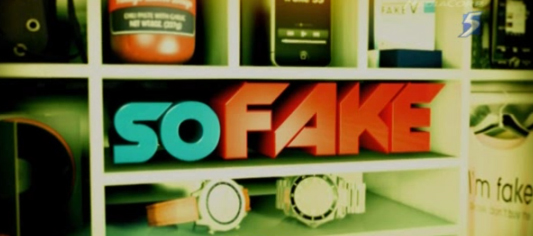
'So Fake' Documentary Series


Recently, I found a documentary series entitled 'So Fake'. Sounds good isn't it?

So Fake is a documentary series produced by Verite Productions Plc. (Singapore). It has been aired in February-March 2012 on Singapore's MediaCorp. So Fake examined the business of counterfeit goods in Asia.

Well, it is not just a simple series because the experts also involved. Among the experts, it featured Mr. Gary Lewis, UNODC Regional Representative, East Asia and the Pacific. What is UNODC? UNODC is an abbreviation of United Nations Office on Drugs and Crimes. It is something big isn't it when you mention 'United Nations'?

Here are the first five episodes preview on the official website of UNODC :
If you keen to watch the full episodes, you can view the playlist here : So Fake Youtube Playlist

Saturday, June 15, 2013

Anti-counterfeiting Packaging

Packaging can be engineered to help reduce the risks of package pilferage or the theft and resale of products: Some package constructions are more resistant to pilferage and some have pilfer indicating seals. Counterfeit consumer goods, unauthorized sales (diversion), material substitution and tampering can all be reduced with these anti-counterfeiting technologies. Packages may include authentication seals and use security printing to help indicate that the package and contents are not counterfeit. Packages also can include anti-theft devices, such as dye-packs, RFID tags, or electronic article surveillance tags that can be activated or detected by devices at exit points and require specialized tools to deactivate. Anti-counterfeiting technologies that can be used with packaging include:
  • Taggant fingerprinting - uniquely coded microscopic materials that are verified from a database
  • Encrypted micro-particles - unpredictably placed markings (numbers, layers and colors) not visible to the human eye
  • Holograms - graphics printed on seals, patches, foils or labels and used at point of sale for visual verification
  • Micro-printing - second line authentication often used on currencies
  • Serialized barcodes
  • UV printing - marks only visible under UV light
  • Track and trace systems - use codes to link products to database tracking system
  • Water indicators - become visible when contacted with water
  • DNA tracking - genes embedded onto labels that can be traced
  • Color shifting ink or film - visible marks that switch colors or texture when tilted
  • Tamper evident seals and tapes - destructible or graphically verifiable at point of sale
  • 2d barcodes - data codes that can be tracked

Friday, June 14, 2013

5 Commonly Counterfeited Items To Avoid Buying

As written by Chris Morran on December 2, 2011 at Consumerist


It’s one thing to purchase a generic or store-brand product that has the same ingredients or components but at a lower price; and a completely different thing to buy a truly counterfeit product that might save you cash but could end up doing damage to your body.

SmartMoney put together a round-up of products that counterfeiters love to fake and which you should avoid buying at all costs. Here are some of items of interest:

1. Shampoo
Even low-price mass-production shampoos are being counterfeited by shady folks out to make a buck at your expense. “Some are little more than water, fragrance, and a thickening agent,” writes SmartMoney, pointing out that any number of things can be used to create suds. “Beijing police seized more than 2,000 boxes of faux shampoo bottles earlier this month contaminated with mercury, sulfur and other heavy metals.”

2. Batteries
Anyone who has rode the L train in NYC is familiar with the refrain of “battery battery battery one dollar batter battery battery” coming from vendors walking up and down the aisle selling what are ostensibly name brand batteries. But if you’ve ever bought and used these batteries, at the very least you probably didn’t get much juice out of them. Or worse, they may have leaked or exploded all over your Walkman.

3. Toothpaste
"Yeah, I use not fake toothpaste, so should you."
Counterfeit toothpaste that’s been mixed with antifreeze (to keep your gums from icing up?) has become such a known issue that even the makers of one of the Law & Orders (I think it was the one with that odd guy from Full Metal Jacket) even dedicated an episode to it. SmartMoney says that in addition to antifreeze or other chemical fun stuff, that tube of faux toothpaste may also contain some nice bacteria.

4. Extension cords
It’s got to be pretty tempting to buy that discount counterfeit extension cord with the tag from “Underwater’s Labradory.” After all, what could be the problem? Well, reports SmartMoney, it might not be sealed properly — zzzaaPPPP! — or that crappy low-grade wire inside can overheat and wreak havoc. The same would go for phony Christmas lights.

5. Sunscreen
That bottle of “Koppertoon” sunscreen may contain dangerous filler chemicals or it may just be generic skin lotion, which won’t do you any good while you’re trekking through the Tocantins… or tailgating outside a Bengals game. Either way, you’re just asking to be burned if you buy this crud.

Wednesday, June 12, 2013

Consumer Protection Laws

    In order to educate and protect the consumers, the government had issued an act in order to protect the consumer in our country.

The Malaysia's Consumer Protection Act 1999 (CPA) (was amended on 2010) is an act which came into effect 1st October 1999. It is a piece of legislation enacted with the main objective to provide greater protection for consumers who acquires goods and services for personal, domestic or household use. This is vital for consumer as the provisions of this act cover areas not covered by other existing laws.

Under the Consumer Protection Act 1999, your rights granted cannot be taken away from you notwithstanding conditions in any agreement that you have signed. Consumers are also protected from products, services, and manufacturing processes that may expose their health and life to danger.

Meanwhile, the Trade Descriptions Act 1972 prohibits misdescription of goods provided in the course of trade and false or misleading indications as to the prices of goods, charges or rates for services, accommodation or facilities. This act was amended to include scratch and win scams, misleading advertisements, sale of imitations or fake products. On August 2011, Trade Descriptions Act 1972 has been subtituted with Trade Descriptions Act 2011.

Other acts protecting consumers are the Direct Sales Act 1993, the Weights and Measures Act 1972, the Hire Purchase Act 1967, the Control of Supplies Act 1961 and the Price Control Act 1946.
You may get the pdf version of the acts here:
Consumer Protection Act 1999

Trade Descriptions Act 1972
 
Trade Descriptions Act 2011
 
Direct Sales Act 1993
 
Weights and Measures Act 1972

Hire-Purchase Act 1967
 
Control of Supplies Act 1961
|| Malay version || English version ||
 
Price Control Act 1946
|| Malay version || English version ||

Price Control and Anti-Profiteering Act 2011

Consumer Tribunals in Malaysia

Ministry of Domestic Trade, Co-operatives and Consumerism (MDTCC)

Formerly known as the Ministry of Domestic Trade and Consumers Affairs, the Ministry of Domestic Trade, Co-operatives and Consumerism (MDTCC)  was established on October 27, 1990 with the aim towards encouraging ethical trade practices and to protect consumer interest.

MDTCC may publish in the Gazette a list of products considered unsafe to be sold and may then require the suppliers or manufacturers of the prohibited products to either recall the products, stop the sale and advertisements of the products, disclose to the public information relating to the characteristics which make the products unsafe, repair or replace the products or refund the purchasers.

The ministry's functions include managing matters related to consumer protection and intellectual property; licensing for manufacturing and sales, direct selling, and selling of petroleum and petrochemical products; implementing weights and measures rules; and registering of trusts companies and businesses. Official site features consumerism education, consumer claim tribunal, goods under price and supply control, acts, statistics, forum, e-aduan and e-tribunal.

The ministry has also set up an interactive and informative consumerism portal known as 1Malaysia Pengguna Bijak (1MPB). Consumer can update themselves with current price of 100 consumer items throughout Malaysia through Pricewatch module. It helps consumer plan their spending wisely through price comparison and know the nearest premise that offer fair price. 1MPB also provides SMS services to consumers - price check and subscriptions, complaint and tribunal claim.

Tribunal For Consumer Claims Malaysia

Tribunal For Consumer Claims Malaysia (or TTPM :- Tribunal Tuntutan Pengguna Malaysia) is an independent judicial body established under Section 85,  Part XII of the Consumer Protection Act 1999 and came into force on 15 November 1999.


The primary objective of establishing the Tribunal is to provide an alternative forum for consumers to file claims in a simple, inexpensive and speedy manner.

The Tribunal has the jurisdiction to hear:
  1. any claim in respect of any matter within its jurisdiction   to  hear as provided for under the Act;
     
  2. where the total amount claimed does not exceed RM25,000.00;
     
  3. any claim in respect of any goods or services for which no redress mechanism is provided for under any other written law; and 
     
  4. a claim based on a cause of action which accrues within three  years of the claim.
 For more info about TTPM, please go to the link here.

Federation of Malaysian Consumers Association (FOMCA)

Federation of Malaysian Consumer Associations (FOMCA) is a national non-governmental organization that is voluntary, non-profit and non-political. It is an umbrella body of registered consumer associations in Malaysia.

FOMCA links the activities of consumer associations in Malaysia as well as at the international level and works towards strengthening consumer protection throughadvocacy, lobbying, networking, representation, campaigning and education.
FOMCA was formed primarily to:
  • Strengthen the growth and spread of the organized consumer movement in Malaysia.
  • Resolve consumer issues and promote the rights of consumers.
  • Promote through the purchasing power of consumers a “need-oriented” development that will ensure socio-economic justice and environmental quality of life for all.
  • Coordinate as an advisory body to all the other consumer organization in Malaysia.

Consumers Association Penang (CAP)

CAP is a grassroots non-profit, non-governmental organization registered as a society with the Registrar of Societies, Malaysia since 1970. Unlike consumer organizations in the western world that advice consumers on the value for their money, CAP stresses ‘value for people’.

Through the years, the scope of CAP's concerns has expanded from matters of daily living such as product price and quality to more complex problems of meeting basic human needs, saving the environment from further deterioration, safeguarding human health, advocating for food security and sustainable livelihoods.
As a defender of consumer rights and interests, CAP organizes community awareness campaigns on a broad spectrum of consumer, health, social, economy and environment issues that involves research, education, capacity building, organizing and media work.
Objectives of CAP include:-
  • To educate consumers, balance consumer needs and degree of protection and to provide relevant consumer rights and entitlements.
  • To advice individual consumers and protect their rights.
  • To ensure prices of goods are fair and appropriate with relevance to its quality and value.
  • To work with the existing laws in order to protect consumer’s interest and general health.
  • To encourage the involvement of society and citizens (consumers) in the consideration, standardization and basic provision of their rights.
  • To work towards ensuring production of high quality products.
  • To study the fluctuations in the market with regards to the factors affecting it, and to advice or make suggestions to the ministry and organizations involved in the business and commercial sectors.
  • To carry out activities such as the publication of bulletins and ceiling price lists, as well as forming market organizations and consumer clubs
Through the years, CAPs work has lead to the exposing unethical business behavior in sectors like chemical products, food, pharmaceuticals and health etc. CAP’s advocacy has led to some improvements in the laws to regulate these practices.

Muslim Consumer Association of Malaysia (PPIM)

The Muslim Consumer Association of Malaysia (PPIM) was established in June 1997 by a group of conscientious Muslim professionals and individuals who were concerned with the growing challenges affecting Muslim consumers. PPIM was formed to safeguard the interests of Muslim consumers nationwide through proactive and strategically planned measures. 
Among the campaigns organized by PPIM is the usage of halal logo and the practice of halal certification policy by business industries as a way to inform and to reassure Muslim consumers that their products are  halal and shariah-compliant. Halal means “permissible”, and covers the aspects of slaughtering, storage, display, preparation, hygiene and sanitation. It covers food as well as non-food category of products.

Twitter Delicious Facebook Digg Stumbleupon Favorites More