Malaysia Consumer Day 2013 (HPM 2013)

Malaysia Consumer Day 2013 is just around the corner! Let’s celebrate it by participating in 11 competitions held in the national level.

SWITCH!: National Energy Efficiency Awareness Campaign

SWITCH! is an effort by Non-Government Organisation (NGO) with the support from government and industries to increase the awareness on importance of ‘efficiency’ in the usage of energy and to play our roles and responsibility together with the government.

Do You as Consumer Aware Enough?

Learn more about consumer and consumerism by clicking on the picture.

Danger of Counterfeit and Fake Products

Dou you know counterfeit is really a serious problem to the world? Find out more about counterfeit by clicking on this picture.

Federation of Malaysian Consumers Associations (FOMCA)

FOMCA is a national non-govermental organization, which is the umbrella body of registered consumer associations in Malaysia. Find out more at their website.

Showing posts with label detect. Show all posts

Sunday, July 7, 2013

How to Identify a Counterfeit Medicine


Today, more people than ever put their health in danger by purchasing counterfeit medicines. Up to 15% of all drugs sold worldwide are fake, and in some parts of Africa and Asia the figure exceeds 50%.

Consumers should be aware about the medicine they take, either real or fake. These are several ways to recognize counterfeit medicine; as stated by Bupa International:
  • Spot the difference. Is the lettering on the packaging hazy and printed flat (rather than raised), or is the expiry date missing?
  • Read carefully. Are the labelling and patient information in a language you understand? If there are misspelled words, contact the manufacturers – it can be a telltale sign.
  • Use your senses. Is the medicine the same size, shape, texture, colour and taste as your previous prescription?
  • Feel for consistency. When you handle the drug does it fall apart easily? If so, it could signal a fake.
  • Do a price check. Does the cost of the drug seem very cheap in comparison with your official provider? If it’s much lower, it could be a scam.

Thursday, June 27, 2013

Guidelines on Handling Counterfeit Banknotes by Commercial Banks


These are the guidelines on handling counterfeit banknotes by commercial banks, as provided by Central Bank of Malaysia (BNM) :

  1. Do not stamp “Disyaki Palsu”, write on, cut, re-circulate or alter the physical condition of the suspected counterfeit banknotes.
  2. Record full details of the sender’s name, address and I/C number, denomination, quantity of counterfeit banknotes and other related information in a record on the detection of suspected counterfeit banknotes.
     
  3. Hand-over a copy of (2) above to sender as proof of the bank’s receipt of the suspected counterfeit banknotes.
     
  4. Photocopy sender’s I/C and the suspected counterfeit banknotes.
     
  5. Lodge a police report at the nearest police station promptly and surrender the suspected counterfeit banknotes, copy of sender’s I/C and other related documents to them.

Checking a Fake Banknote

You might had visited the post on Detecting a Counterfeit Banknote but the article seems a lot of words and may irritate some of word-o-phobia (really?).

So we brought to you the video version which is more interactive and attractive, produced by lunaticg blog. The money used here is Malaysia Ringgit (MYR) 100.
Here you go:


Wednesday, June 26, 2013

How to Differentiate or Identify Counterfeit Notes using Banknote Detector

How to spot fake money?  How to check and confirm forgery notes?
Here are some useful tips to identify counterfeit RM50 notes; brought to you by Nibo Corporation Sdn Bhd.
*RM/MYR stand for Ringgit Malaysia


Overall paper reflection of UV light
 ( means real banknote, X means fake banknote)

Security vertical strip does not differentiate the real and fake banknotes
Deer head reflection (real banknote)
Deer head reflection (fake banknote)

Serial number reflection (fake banknote)
Serial number reflection (real banknote)

Tuesday, June 25, 2013

What Do You Do If You Receive a Counterfeit Banknote?


After you able to detect any counterfeit and fake banknote, you must be wondering; what should I do now?

Some advices, do notify the police immediately if you have received counterfeit banknotes. Using or returning counterfeit banknotes is just as illegal as manufacturing it. Counterfeit banknotes are not eligible for replacement!

Follow these steps (as provided by Central Bank of Malaysia or BNM):
  • Delay the person (passer) who gives you the counterfeit banknotes if possible and observe the passer's description, as well as that of his/her companion if any, and the license numbers of any vehicles used by them
     
  • Do not write on, cut or re-circulate the counterfeit currency
     
  • Handle the currency as little as possible (e.g. you can put it in an envelope or plastic cover). Record on a separate sheet of paper all the details about how you got the currency, who gave it to you, where and when you got it
     
  • Take the counterfeit currency to the nearest police station and surrender the counterfeit currency to them after lodging a police report

Monday, June 24, 2013

Detecting a Counterfeit Banknote

Counterfeit banknotes are reproduction of the real banknotes using materials of low quality but appear similar to the genuine with intent to deceive member of the public.

Counterfeit banknotes have no value but it is possible that they may be used and may escape detection for some time. Thus, protect yourself and always check your banknotes when you receive them. Here are some tips from Central Bank of Malaysia (BNM).

Detecting a Counterfeit Banknote

All counterfeits of modern banknotes can be recognized without too much difficulty. The differences can be seen upon closer examination by applying the "FEEL , LOOK, TILT and CHECK" Principle.

1. Counterfeit Detection: Feel
Security Features Genuine Counterfeit
Feel the quality of paper The genuine banknote is usually printed on very high quality paper and manufactured from cotton. It has a unique feel, crisp sound and slightly rough in the heavily printed areas. The paper used for making the counterfeit notes appears to be poor quality,most common commercial type of paper.
Feel the Intaglio Printing The intaglio print is a raised printing effect produced by applying layers of tactile inks on various parts of the front and reverse sides of the notes The counterfeit banknote does not have feeling the raised printing.

2. Counterfeit Detection: Look
Security Features Genuine Counterfeit
Look at the banknote and hold it up to the light The genuine banknote carry a watermark portrait, security thread and perfect see through features . A watermark portrait of Yang DiPertuan Agong has three dimensional effect and appears soft and shady without sharp outlines portrait. At the base of watermark a denomination number is clearly visible.
The security thread will always looked embedded in the paper. The hibiscus flower on the obverse will register perfectly with the same flower on the reverse of the banknote.
The watermark in the counterfeit is not visible. If any, it can be appears like a drawing.

The security thread is simulated and rather blurs, and can be easily scrapped off.
The see through features does not perfectly registered with the pattern on the reverse side of the banknote.
Look under magnifying glass You can see micro lettering on observe and reverse sides of all banknotes. The lettering on a genuine banknote should be sharp and not blurred. The micro lettering of the words 'BANKNEGARA MALAYSIA', 'BNM' and banknotes denomination i.e. RM1, RM5, RM10, RM50 and RM100 on the banknote are not present, only dots are printed to simulate this features.
Look ultra-violet light Invisible fluorescent elements representing various elements of the background on the obverse and reverse will fluoresce in different colours. Various elements are captured under UV light such as invisible fibres and phosphorescence square. Under UV light the invisible fibres and phosphorescence square are completely missing in the counterfeit note. The paper of the counterfeit is UV bright, meaning that it glows more than genuine banknote paper.


3. Counterfeit Detection: Tilt
Tilt the banknote
LEAD feature (incorporated in RM10, RM50 and RM100)
You can see the iridescent stripe shines under a bright light and showing the banknote denomination and the name of BNM when the view angle is shifted.

Lead feature is very difficult to counterfeit. Normally the shines of the LEAD cannot be seen. Some counterfeiters will attempt to simulate it by using a plain shiny foil.

PEAK feature
When changing the angle of view by shifting the banknote, a hidden image of denomination number i.e. 50 will be revealed in the centre of the PEAK square.
There is no latent image of denomination in the PEAK feature or some simulation of image has been attempted.

Security Features
Various security features have been incorporated into the Malaysia Ringgit banknote. It is important for you to be aware of some of these security features and be able to distinguish between genuine and counterfeit notes which are completely worthless.

Level
Examination
Security Features
Level I : Public Human Sense
  • Watermark Portrait
  • Security Thread
  • LEAD Feature
  • PEAK Feature
  • Perfect See Through
  • Intaglio Print
Level II : Cash Handler Human Sense & Equipments
  • All the first level features
  • Security Fiber
  • Fluorescent Elements
  • Micro Lettering
  • Fluorescent Square

Saturday, June 22, 2013

Criteria to be Considered Before Purchase


There are a lot of consumers who often purchase items that are broken, counterfeit and even hazardous.

What are the criteria to be considered before a consumer makes a purchase? Here are the list as provided by the Malaysia's Ministry of Domestic Trade, Co-operatives and Consumerism (MDTCC) on their official website:
  • Place of origin of products, including name and address of manufacturers, importers, wholesalers, agents or distributors, group of product, model/stock number and trademark.
  • Date of manufacture and expiry date.
  • Minimum weight, quantity, amount or load of goods.
  • General product information  including content, capacity, user guide and limitations
  • Specific descriptions of the product content such as list of materials, the ratio of the ingredients and nutritional information.
  • Quality or capability of the product such as sign of approval and grades (e.g.: SIRIM, Suruhanjaya Tenaga).
  • Specific terms of sale, including proposed price, discounts and special offers.
  • Specific information such as warning, emergency regulations to specific  users (e.g. children).

Wednesday, June 19, 2013

Steps to spot counterfeit goods and avoid buying them


When you go for shopping at hypermarket, or shops or flea market or even online shopping, do you know the steps that you can follow so that you could avoid counterfeit stuffs?

These are the steps to spot counterfeit goods and avoid buying them as outlined by the United States Patent and Trademark Office (USPTO) :

1. Scrutinize the labels, packaging, and contents of goods.
2. Seek authorized retailers.
3. Look for missing sales tax charges.
4. Insist on secure transactions.
5. Know the actual cost of the goods.
6. Familiarize yourself with the appearance of the product and where it is sold.
7. Examine the workmanship and quality of the goods.

Learn more through the USPTO video:


Monday, June 17, 2013

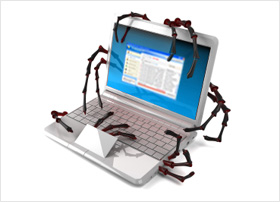
Detecting and Avoiding Fake Anti-Virus Software


Your Computer Is Infected with Malware!
Click here to purchase recommended anti-virus software!

You may be familiar with this or similar messages urging you to take action purportedly designed to clean your allegedly infected computer. Unfortunately, these messages are often scams that attempt to install malicious software (malware) onto your computer. Such software is referred to as rogue (fake) anti-virus software. Last year, the FBI reported an estimated loss to victims in excess of $150 million from this type of scam.

How can my system get infected?

These types of scams can be perpetrated in a number of ways, including via website pop-up messages, web banner advertisements, spam and postings on social networking sites. Scams are also appearing via the use of "tweeting." The rogue anti-virus software scam generally uses social engineering to make the user believe his or her machine is infected and that by taking action (clicking on the link provided) the machine will be cleaned. If you click on the malicious link, you may be downloading malware onto your machine. The names of the fake programs sound legitimate, and often, in a further attempt to make the malware appear legitimate, the programs may prompt you to pay for an annual subscription for the fake software.

Some varieties of rogue anti-virus programs will also get installed on your machine without any interaction by you. Your machine could be compromised just by you visiting a website with a malicious ad or code.

What is the impact from rogue anti-virus software?

Rogue anti-virus software might perform many activities, including installing files to monitor your computer use, steal credentials, install backdoor programs, and add your computer to a botnet. The installation of malware could result in a high-jacked browser (i.e., the browser navigates to sites you did not intend), the appearance of new or unexpected toolbars or icons and sluggish system performance. Additionally, another concern related to rogue anti-virus software is the false sense of security you may have, erroneously believing your machine is protected by anti-virus software when in fact it is not.

What can I do to protect my computer?

Applying computer security best practices will help protect your machine and minimize any potential impacts.
  1. Don't click on pop-up ads that advertise anti-virus or anti-spyware programs. If you are interested in a security product, don't try to access it through a pop-up ad; contact the retailer directly through its home page, retail outlet or other legitimate contact methods.
  2. Don't download software from unknown sources. Some free software applications may come bundled with other programs, including malware.
  3. Use and regularly update firewalls, anti-virus, and anti-spyware programs. Keep these programs updated regularly. Use the auto-update feature, if available.
  4. Patch operating systems, browsers, and other software programs. Keep your system and programs updated and patched so that your computer will not be exposed to known vulnerabilities and attacks.
  5. Regularly scan and clean your computer. Scan your computer with your anti-virus and anti-spyware on a regular basis.
  6. Back up your critical files. In the event that your machine becomes infected, having backups of your important files will facilitate recovery.

NOTE: Regarding the above recommendations, many organizations have formal processes that automatically update and patch appropriate software, scan computers and perform file back-ups. In these cases, no end user action is necessary.

For more information, please visit:

Twitter Delicious Facebook Digg Stumbleupon Favorites More