Malaysia Consumer Day 2013 (HPM 2013)

Malaysia Consumer Day 2013 is just around the corner! Let’s celebrate it by participating in 11 competitions held in the national level.

SWITCH!: National Energy Efficiency Awareness Campaign

SWITCH! is an effort by Non-Government Organisation (NGO) with the support from government and industries to increase the awareness on importance of ‘efficiency’ in the usage of energy and to play our roles and responsibility together with the government.

Do You as Consumer Aware Enough?

Learn more about consumer and consumerism by clicking on the picture.

Danger of Counterfeit and Fake Products

Dou you know counterfeit is really a serious problem to the world? Find out more about counterfeit by clicking on this picture.

Federation of Malaysian Consumers Associations (FOMCA)

FOMCA is a national non-govermental organization, which is the umbrella body of registered consumer associations in Malaysia. Find out more at their website.

Showing posts with label medicine. Show all posts

Sunday, July 7, 2013

How to Identify a Counterfeit Medicine


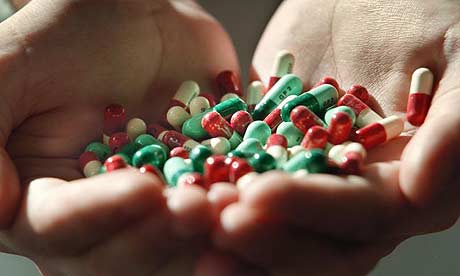
Today, more people than ever put their health in danger by purchasing counterfeit medicines. Up to 15% of all drugs sold worldwide are fake, and in some parts of Africa and Asia the figure exceeds 50%.

Consumers should be aware about the medicine they take, either real or fake. These are several ways to recognize counterfeit medicine; as stated by Bupa International:
  • Spot the difference. Is the lettering on the packaging hazy and printed flat (rather than raised), or is the expiry date missing?
  • Read carefully. Are the labelling and patient information in a language you understand? If there are misspelled words, contact the manufacturers – it can be a telltale sign.
  • Use your senses. Is the medicine the same size, shape, texture, colour and taste as your previous prescription?
  • Feel for consistency. When you handle the drug does it fall apart easily? If so, it could signal a fake.
  • Do a price check. Does the cost of the drug seem very cheap in comparison with your official provider? If it’s much lower, it could be a scam.

Friday, July 5, 2013

Are Fake Prescription Drugs Killing Us?


"What would have cost tens of thousands of dollars...can now be done for hundreds of dollars, so it's easier to fake stuff now," warns Roger Bate, resident scholar at the American Enterprise Institute (AEI) and the author of "Phake: The Deadly World of Falsified and Substandard Medicine."
Counterfeit, adulterated, or otherwise compromised prescription drugs are a major problem in Africa and a growing problem in the First World, argues Bate. In recent years, counterfeiters passed off hundreds of thousands of phony Lexapro pills around the globe and in 2008 at least 149 Americans died from fake Heparin, a blood-thinning drug. All told, says Bate, the number of deaths globally from ineffective drugs ranges from 100,000 to 1 million.

As drug production moves to China and other developing nations where oversight is tougher to maintain and more sales take place online where provenance can be tougher to ascertain, Bate says that the most viable solution is increased vigilance on the part of drug makers, providers, and patients alike. He looks forward to a fast-approaching world in which hand-held spectrometers verify pills on the spot and praises various online-pharmacy certification programs.
Referring to the classic 1949 film, "The Third Man," in which Orson Welles plays a drug counterfeiter whose watered-down penicillin in post-war Europe leads to the death of several children, Bate gives Hollywood credit for being well ahead of the curve on putting the spotlight on what he calls "the 2nd oldest profession."

Wednesday, July 3, 2013

The fight against counterfeit drugs


60 Minutes' nine-month investigation of counterfeit prescription drugs reveals how the dangerous and sometimes deadly fakes get into the nation's drug pipeline. Dr. Sanjay Gupta reports.


Tuesday, July 2, 2013

Control and Reporting Counterfeit Medicine In Malaysia

Control
The Ministry of Health has imposed the use of security label hologram (picture 1) to all medicinal products since September 2005. This is to prevent and control counterfeit products assessing the Malaysian market. Medicinal product with genuine MeditagTM hologram is considered genuine and medicinal product with fake hologram or without the MeditagTM hologram is considered counterfeit and unregistered. The authenticity of the MeditagTM hologram can be examined by the public in all community pharmacies in Malaysia using Decoder MeditagTM (picture 2). 

alt
Picture 1: Meditag Hologram

alt
Picture 2: Meditag Decoder

alt
Picture 3: Verifying the authenticity of the Meditag hologram in pharmacy

alt
Picture 4: Example of counterfeit medicine (with & without Meditag Hologram)

Reporting
If a medicine is suspected to be illegal or counterfeited, publics are advised to stop taking and seek medical advice should they fell unwell. They can report the incident to their pharmacist or doctor who will then inform the Ministry of Health accordingly. Alternatively they may report directly to the:

Pharmaceutical Services Division,
Ministry of Health, Malaysia,
Lot 36, Jalan Universiti,
46350 Petaling Jaya.
Tel: 03 7841 3200
Fax: 03 7968 2251 or

Public can visit the Pharmaceutical Services Division official web sites, www.pharmacy.gov.my for further information.

Source: MyHealth Ministry of Health Malaysia

Monday, July 1, 2013

What Is Counterfeit Medicines?


Introduction
Counterfeit medicines are found everywhere in the world ranging from random mixtures of harmful toxic substances to inactive and ineffective preparations. Some contain a declared, active ingredient and look so similar to the genuine product that they deceive health professionals as well as patients. But in every case, the source of a counterfeit medicine is unknown and its content unreliable. Counterfeit medicines are illegal in Malaysia. They can result in treatment failure or even death. Eliminating them is a considerable public health challenge.

Definition
The World Health Organization (WHO) defines counterfeits medicines as:
"medicines that are deliberately and fraudulently mislabelled with respect to identity and/or source. Both branded and generic products are subject to counterfeiting. Counterfeit medicines may include products with the correct ingredients or with the wrong ingredients, without active ingredients, with insufficient or too much active ingredient, or with fake packaging".

As for Malaysia, there is no specific definitions on counterfeits medicines, however the legislation for counterfeit products are well covered under The Trade Act. According to The Sales and Drug Act 1952: Regulation 7(1)(a), 7(1A)(a-g) of the Control of Drugs and Cosmetic Regulation (CDCR) states that all medicinal products must be registered with National Pharmaceutical Control Bureau (NPCB) Ministry of Health before being marketed. All registered medicinal products will be given a unique registration numbers.

Products with the following criteria are considered unregistered medicinal products which include the counterfeit medicinal products:-

(i) if they bear
  • No registration number
  • False registration number
  • Registration number belonging to other products
  • Registration number which has been cancelled
  • No safety label hologram Meditag TM
  • False hologram Meditag TM
  • Ingredient which differ from the original formula during registration
  • A mixture of 2 registered products
  • Information on the packaging which differ from the approved version
(ii) if they contain Adulterants

Twitter Delicious Facebook Digg Stumbleupon Favorites More