Malaysia Consumer Day 2013 (HPM 2013)

Malaysia Consumer Day 2013 is just around the corner! Let’s celebrate it by participating in 11 competitions held in the national level.

SWITCH!: National Energy Efficiency Awareness Campaign

SWITCH! is an effort by Non-Government Organisation (NGO) with the support from government and industries to increase the awareness on importance of ‘efficiency’ in the usage of energy and to play our roles and responsibility together with the government.

Do You as Consumer Aware Enough?

Learn more about consumer and consumerism by clicking on the picture.

Danger of Counterfeit and Fake Products

Dou you know counterfeit is really a serious problem to the world? Find out more about counterfeit by clicking on this picture.

Federation of Malaysian Consumers Associations (FOMCA)

FOMCA is a national non-govermental organization, which is the umbrella body of registered consumer associations in Malaysia. Find out more at their website.

Sunday, June 16, 2013

Google fights fake Products


As written by Inga Höfener on April 10, 2011 at Consumer Goods Club Blog

Internet search-engine Google intends to increases its efforts against advertising of fake products. Google has been criticized in the past for promoting fake products via its ad-word advertising.

Google intends to establish a reporting site which encourages consumers to notify Google of suspicious advertisments. Those reports shall be traced within 24 hours.

The question is: will Google’s approach prevent consumers from buying fake products?

I would say no! According to a study of the US Chamber of Commerce the Internet is the most favored emporium for fake products. Websites promoting faked goods or pirated copies record up to 53 billon visitors each year! Why should the visitors of those websites notify Google?

Of course there is an urgent need for action. Web based counterfeiting and piracy causes damages of estimated 150 billion Euros (!!!) each year. The European Commission also realized the need for action and intends to reinforce penal laws.

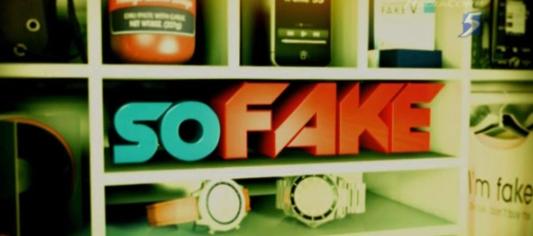
'So Fake' Documentary Series


Recently, I found a documentary series entitled 'So Fake'. Sounds good isn't it?

So Fake is a documentary series produced by Verite Productions Plc. (Singapore). It has been aired in February-March 2012 on Singapore's MediaCorp. So Fake examined the business of counterfeit goods in Asia.

Well, it is not just a simple series because the experts also involved. Among the experts, it featured Mr. Gary Lewis, UNODC Regional Representative, East Asia and the Pacific. What is UNODC? UNODC is an abbreviation of United Nations Office on Drugs and Crimes. It is something big isn't it when you mention 'United Nations'?

Here are the first five episodes preview on the official website of UNODC :
If you keen to watch the full episodes, you can view the playlist here : So Fake Youtube Playlist

Saturday, June 15, 2013

Anti-counterfeiting Packaging

Packaging can be engineered to help reduce the risks of package pilferage or the theft and resale of products: Some package constructions are more resistant to pilferage and some have pilfer indicating seals. Counterfeit consumer goods, unauthorized sales (diversion), material substitution and tampering can all be reduced with these anti-counterfeiting technologies. Packages may include authentication seals and use security printing to help indicate that the package and contents are not counterfeit. Packages also can include anti-theft devices, such as dye-packs, RFID tags, or electronic article surveillance tags that can be activated or detected by devices at exit points and require specialized tools to deactivate. Anti-counterfeiting technologies that can be used with packaging include:
  • Taggant fingerprinting - uniquely coded microscopic materials that are verified from a database
  • Encrypted micro-particles - unpredictably placed markings (numbers, layers and colors) not visible to the human eye
  • Holograms - graphics printed on seals, patches, foils or labels and used at point of sale for visual verification
  • Micro-printing - second line authentication often used on currencies
  • Serialized barcodes
  • UV printing - marks only visible under UV light
  • Track and trace systems - use codes to link products to database tracking system
  • Water indicators - become visible when contacted with water
  • DNA tracking - genes embedded onto labels that can be traced
  • Color shifting ink or film - visible marks that switch colors or texture when tilted
  • Tamper evident seals and tapes - destructible or graphically verifiable at point of sale
  • 2d barcodes - data codes that can be tracked

World's Largest Counterfeit Cartridge Bust in UAE

 
As published
Ajman police raided a company and arrested some Chinese dealers involved in the production of fake HP printer ink cartridges worth nearly Dh280 million ($76 million/€57 million), the world’s largest amount of counterfeit ink to be seized.

Police raided the massive warehouse which operated under the cover of carpet production following a complaint by HP in the UAE.

Newspapers said all the forged cartridges carried HP trademark and that police also seized equipment for filling and forging the trade mark as well as printers and laser systems used in copying the original company’s production code.

Police said the arrested Chinese live legally in the UAE and own one company, two warehouses and one villa in Ajman and one store in Dubai.

“It was the largest fake ink cartridge in the world to be seized by the police,” sai9d Brigadier Sheikh Sultan Al Nuaimai, Ajman’s deputy police commander.

He said those involved could be either jailed or fined between Dh5000 ($1,300/€1,000) to Dh10,000 ($2,700/€2,000), adding that there is a need to introduce tougher penalties in such crimes.

Friday, June 14, 2013

5 Commonly Counterfeited Items To Avoid Buying

As written by Chris Morran on December 2, 2011 at Consumerist


It’s one thing to purchase a generic or store-brand product that has the same ingredients or components but at a lower price; and a completely different thing to buy a truly counterfeit product that might save you cash but could end up doing damage to your body.

SmartMoney put together a round-up of products that counterfeiters love to fake and which you should avoid buying at all costs. Here are some of items of interest:

1. Shampoo
Even low-price mass-production shampoos are being counterfeited by shady folks out to make a buck at your expense. “Some are little more than water, fragrance, and a thickening agent,” writes SmartMoney, pointing out that any number of things can be used to create suds. “Beijing police seized more than 2,000 boxes of faux shampoo bottles earlier this month contaminated with mercury, sulfur and other heavy metals.”

2. Batteries
Anyone who has rode the L train in NYC is familiar with the refrain of “battery battery battery one dollar batter battery battery” coming from vendors walking up and down the aisle selling what are ostensibly name brand batteries. But if you’ve ever bought and used these batteries, at the very least you probably didn’t get much juice out of them. Or worse, they may have leaked or exploded all over your Walkman.

3. Toothpaste
"Yeah, I use not fake toothpaste, so should you."
Counterfeit toothpaste that’s been mixed with antifreeze (to keep your gums from icing up?) has become such a known issue that even the makers of one of the Law & Orders (I think it was the one with that odd guy from Full Metal Jacket) even dedicated an episode to it. SmartMoney says that in addition to antifreeze or other chemical fun stuff, that tube of faux toothpaste may also contain some nice bacteria.

4. Extension cords
It’s got to be pretty tempting to buy that discount counterfeit extension cord with the tag from “Underwater’s Labradory.” After all, what could be the problem? Well, reports SmartMoney, it might not be sealed properly — zzzaaPPPP! — or that crappy low-grade wire inside can overheat and wreak havoc. The same would go for phony Christmas lights.

5. Sunscreen
That bottle of “Koppertoon” sunscreen may contain dangerous filler chemicals or it may just be generic skin lotion, which won’t do you any good while you’re trekking through the Tocantins… or tailgating outside a Bengals game. Either way, you’re just asking to be burned if you buy this crud.

Counterfeit Consumer Goods

Counterfeit consumer goods (knock-offs in colloquial language) are by definition goods infringing the rights of a trade mark holder by displaying a trade mark which is either identical to a protected trade mark or by using an identification mark which "cannot be distinguished in its essential aspects from such trade mark".

Counterfeit Basketball Shoes (Nike Zoom Kobe IV)

The spread of counterfeit goods has become global in recent years. According to the Counterfeiting Intelligence Bureau (CIB) of the International Chamber of Commerce (ICC), counterfeit goods make up 5 to 7% of world trade. A report by the Organisation for Economic Co-operation and Development (OECD) states that up to $200 billion of international trade could have been for counterfeit and pirated goods in 2005, and around $250 billion in 2007. Other estimates conclude that a more accurate figure is closer to $600 billion lost, since the OECD estimates do not include online sales or goods counterfeited and sold within the same country. The range of counterfeited consumer goods is wide. Besides numerous smaller goods such as watches, purses, cigarettes, movies and software, larger items such as cars and motorcycles are also being knocked off, including Porsches and Ferraris. There is a rapidly growing trade in counterfeit drugs and computer parts, with some mock parts discovered inadvertently in use by NASA, the U.S. Navy and the U.S. Army, which alone estimates that the growth in counterfeit electronics has more than doubled between 2005 and 2008. Among the causes for its growth are many: more of the world's manufacturing is being transferred overseas, the growth in internet e-commerce sales, and the fact that consumers hit by the recession will seek out lower-cost items.

Types of seized counterfeit goods, by value, in U.S. during 2010
The United States faces the most economic impact, being the world's largest consumer nation. Underwriters Laboratories (UL) confirms that counterfeiting is "a thriving multi-billion dollar global industry," where the risks of legal consequences are low. In addition, counterfeiting profits fund other organized criminal activities. In 2007, it estimated 750,000 jobs had been lost in the U.S. alone due to counterfeiting. The value of counterfeit goods seized at U.S. borders jumped 40% in one year, from 2007 to 2008, while Europe seized over 50% more during that same year.
Counterfeiters use the reputation of a trademark, which brand manufacturers have built up on the basis of the quality of their products, to fool consumers about the true origin and quality of the goods.
—German Customs– Official Homepage
Counterfeited spareparts (speaking for example of forged brake linings or safety valves) endanger road transport and general aviation as well as the associated industries. Counterfeit products are often produced in violation of basic human rights and child labor laws. As widely reported the profits support terrorist groups, drug cartels, people smugglers and street gangs. Crackdown on counterfeit goods is thus not only a matter of job security for various countries, but one of national and international security.

Source

HP Anti-Counterfeit Toner Cartridge Technology

As if to emphasize industry concerns over counterfeiting and sales of black market printer supplies, HP has launched a Toner Cartridge Authentication (TCA) program to help customers confirm the purchase of original HP toner cartridges.

HP mentioned here is referred to Hewlett-Packard Company which is one of super big company that provides products, technologies, software and many more. Some of the products are printers, scanners, digital cameras and also tablet computers.

HP had introduced this free, downloadable software to help customers distinguish original OEM HP toner cartridges from counterfeits. In addition, HP's new Toner Cartridge Authentication program will identify remanufactured cartridges as "used," along with identifying other non-genuine cartridge states. The company is also offering customers who own various LaserJets and download the software various rewards for using original OEM supplies.

Counterfeit products always give consumers a lot of problem.

If the cartridge is identified as something other than a genuine HP cartridge, the program will present the user with a range of recommended options aimed at addressing potential counterfeiting. If the user believes that he has bought a genuine HP cartridge and the software determines that it is not, then he will be directed to HP’s Anti-counterfeit website to report the a potential counterfeit.

Sounds good isn't it? It simply helps the user from using the counterfeiting products.

If you eager to have the software, you may go here.

Read more about this technology on Goat-Labs and CatridgeSave.

Thursday, June 13, 2013

Types of Counterfeit Consumer Goods

General description

Growth in seizures of counterfeit goods by U.S.
According to the Organisation for Economic Co-operation and Development (OECD), counterfeit products encompass all products made to closely imitate the appearance of the product of another as to mislead consumers. Those can include the unauthorised production and distribution of products that are protected by intellectual property rights, such as copyright, trade marks and trade names. In many cases, different types of those infringements can often overlap: Music piracy mostly infringes copyright as well as trade marks; fake toys infringe design protection. The term "counterfeiting" therefore addresses piracy and related issues, such as copying of packaging, labelling, or any other significant features of the goods.

Among the leading industries that have been seriously affected by counterfeiting are software, music recordings, motion pictures, luxury goods and fashion clothes, sportswear, perfumes, toys, aircraft components, spare parts and car accessories, and pharmaceuticals.

Apparel and accessories

A counterfeit Patek Philippe watch.
The hand on the left sub-dial has fallen off.
Counterfeit clothes, shoes and handbags from designer brands are made in varying quality; sometimes the intent is only to fool the gullible buyer who only looks at the label and doesn't know what the real thing looks like, while others put some serious effort into mimicking fashion details. Others realize that most consumers do not care if the goods they buy are counterfeit and just wish to purchase inexpensive products. The popularity of designer jeans in 1978, spurred a flood of knockoffs. Factories that manufacture counterfeit designer brand garments and watches are usually located in developing countries. International tourists visiting Beijing, China, will find a wide selection of counterfeit designer brand garments at the infamous Silk Street. Expensive watches are vulnerable to counterfeiting; it is a common cliché that any visitor to New York City will be approached on a street corner by a vendor with a dozen such counterfeit watches inside his coat, offered at bargain prices. In Malaysia, Thailand, Vietnam and the Philippines, extremely authentic looking, ranging from very poor quality watch fakes with self-winding mechanisms and fully working movements can sell for as little as US $20 to good quality ones that sell for 1 $100 and over. Also some fakes' movements and materials are of remarkably passable quality — albeit inconsistently so — and may look good and work well for some years, a possible consequence of increasing competition within the counterfeiting community. Thailand has opened a Museum of Counterfeit Goods displaying over 3,500 different items, in 14 different categories, which violate trade marks, patents, or copyrights.

Wine

In China, counterfeit high-end wines are a growing beverage industry segment, where fakes are sold to Chinese consumers. Knock-off artists refill empty bottles from famous chateaux with inferior vintages. According to one source, "Upwardly mobile Chinese, eager to display their wealth and sophistication, have since developed a taste for imported wine along with other foreign luxuries." In China, wine consumption more than doubled since 2005, making China the seventh-largest market in the world. The methods used to dupe innocent consumers includes photocopying labels, creating different and phony chateaux names on the capsule and the label. Sometimes authentic bottles are used but another wine is added by using a syringe. The problem is so widespread in China, the U.S. and Europe, that auction house Christie's has begun smashing empty bottles with a hammer to prevent them from entering the black market. During one sale in 2008, a French vintner was "shocked to discover that '106 bottles out of 107' were fakes." According to one source, counterfeit French wines sold locally and abroad "could take on a much more serious amplitude in Asia because the market is developing at a dazzling speed." Vintners are either unable or hesitant to fight such counterfeiters: "There are no funds. Each lawsuit costs 500,000 euros," states one French vintner. In addition, some vintners, like product and food manufacturers, prefer to avoid any publicity regarding fakes to avoid injuring their brand names. Counterfeit wine is also found in the West; it is primarily a problem for collectors of rare wine, especially of pre-WWII French wines, as producers kept spotty records at the time. Famous examples of counterfeiting include the case of Hardy Rodenstock, who was involved with the so-called "Jefferson bottles," and Rudy Kurniawan, who was indicted in March 2012 for attempting to sell faked bottles of La Tâche from Domaine de la Romanée-Conti and Clos St. Denis from Domaine Ponsot. In both cases, the victims of the fraud were high-end wine collectors, including Bill Koch, who sued both Rodenstock and Kurniawan over fake wines sold both at auction and privately.

Distribution

Compact Discs, videotapes and DVDs, computer software and other media that are easily copied can be counterfeited and sold through vendors at street markets, night markets, mail order, and numerous Internet sources, including open auction sites like eBay. In some cases where the counterfeit media has packaging good enough to be mistaken for the genuine product, it is sometimes sold as such. Music enthusiasts may use the term "bootleg recording" to differentiate otherwise unavailable recordings from counterfeited copies of commercially released material. In August 2011, it was reported that at least 22 fake Apple computer stores were operating in parts of China, despite others having been shut down in the past by authorities at other locations. The following month, also in China, it was discovered that the popular mobile game Angry Birds, had been re-created into a theme park without permission from its Finnish copyright or trade mark owners.

Drugs

Bulk bag of counterfeit Viagra
According to the U.S. FBI, the counterfeiting of pharmaceuticals accounts for an estimated $600 billion in global trade, and may be the "crime of the 21st century." They add that it "poses significant adverse health and economic consequences for individuals and corporations alike." The World Health Organization (WHO) estimates that over 30% of pharmaceuticals in developing countries are fake, stating that "Anyone, anywhere in the world, can come across medicines seemingly packaged in the right way but which do not contain the correct ingredients and, in the worst-case scenario, may be filled with highly toxic substances.” The U.S. Food and Drug Administration (FDA) describes counterfeit drugs as those sold under a product name without proper authorization:
"Counterfeiting can apply to both brand name and generic products, where the identity of the source is mislabeled in a way that suggests that it is the authentic approved product. Counterfeit products may include products without the active ingredient, with an insufficient or excessive quantity of the active ingredient, with the wrong active ingredient, or with fake packaging."
Experts estimate that counterfeit medications kill at least 100,000 people a year, mostly in undeveloped countries. According to the The Economist, between 15%-30% of antibiotic drugs in Africa and South-East Asia are fake. The UN estimates that roughly half of the antimalarial drugs sold in Africa—worth some $438m a year—are counterfeits. Pfizer Pharmaceuticals has found fake versions of at least 20 of its products, such as Viagra and Lipitor, in the legitimate supply chains of at least 44 countries. Pfizer also found that nearly 20% of Europeans had obtained medicines through illicit channels, amounting to $12.8 billion in sales. Other experts estimate the global market for fake medications could be worth between $75 billion and $200 billion a year, as of 2010. Other counterfeit prescription drugs that have been found in the "legitimate" supply chain are Plavix, used to treat blood clots, Zyprexa for schizophrenia, Casodex, used to treat prostate cancer, Tamiflu, used to treat influenza, including Swine flu, and Aricept, used to treat Alzheimers. The EU reported that as of 2005 India was by far the biggest supplier of fake drugs," accounting for 75 percent of the global cases of counterfeit medicine. Another 7% came from Egypt and 6% from China. Those involved in their production and distribution include medical professionals such as pharmacists and physicians, organized crime syndicates, rogue pharmaceutical companies, corrupt local and national officials and terrorist organizations. The Philippine Department of Health has found that 10% of drugs sold in their country were counterfeit. In 2005, counterfeit pharmaceuticals affected less than one percent in developed countries, such as the U.S. , Australia, and countries within the EU, with the problem growing due to increased global sourcing and manufacturing. A study by the OECD concluded that "a worrisome trend is that counterfeits are increasingly being detected as having entered the supply chain of some of the most regulated jurisdictions," noting an example of one source reporting a 27% increase in number of incident over one year." According to the World Health Organization (WHO), by 2006 developing countries had a counterfeit prevalence of 10-30 per cent or higher.

Food

Food fraud, "the intentional adulteration of food with cheaper ingredients for economic gain," is a well-documented crime that has existed in the U.S. and Europe for many decades. It has only received most attention in recent years as the fear of bioterrorism has increased. Numerous cases of intentional food fraud have been discovered over the last few years:
U.S.
  • In 2008, U.S. consumers were "panicked" and a "media firestorm" ensued when Chinese milk was discovered to have been adulterated with the chemical melamine, to make milk appear to have a higher protein content. It caused 900 infants to be hospitalized with six deaths.
  • In 2007, the University of North Carolina found that 77 percent of fish labeled as red snapper was actually tilapia, a common and less flavorful species. The Chicago Sun-Times tested fish at 17 sushi restaurants found that fish being sold as red snapper actually was mostly tilapia. Other inspections uncovered catfish being sold as grouper, which normally sells for nearly twice as much as catfish. Fish is the most frequently faked food Americans buy, which includes "...selling a cheaper fish, such as pen-raised Atlantic salmon, as wild Alaska salmon." In one test, Consumer Reports found that less than half of supposedly "wild-caught" salmon sold in 2005-2006 were actually wild, and the rest were farmed.
  • French cognac was discovered to have been adulterated with brandy, and their honey was mixed with cheaper sugars, such as high-fructose corn syrup.
  • In 2008, U.S. food safety officers seized more than 10,000 cases of counterfeit extra virgin olive oil, worth more than $700,000, from warehouses in New York and New Jersey. Olive oil is considered one of the most frequently counterfeited food products, according to the FDA, with one study finding that a lot of products labeled as "extra-virgin olive oil" actually contained up to 90% soybean oil.
However, in the U.S., where the Food and Drug Administration (FDA) is the primary regulatory body for food safety and enforcement, they admit that the "sheer magnitude of the potential crime" makes prevention difficult, along with the fact that food safety is not treated as a high priority. They note that with more than 300 ports of entry through which 13 percent of America's food supply passes, the FDA is only able to inspect about 2 percent of that food. "
Europe
Food counterfeiting and piracy is a serious threat in Europe. In 2005, EU customs seized more than 75 million counterfeited and pirated goods, including foods, medicines and other goods, party due to internet sales. More than 5 million counterfeit food-related items, including drinks and alcohol products were seized. According to the EU's taxation and customs commissioner, "A secret wave of dangerous fakes is threatening the people in Europe."

Cigarettes

British undercover detectives have found that counterfeited cigarettes contain frequently human excrement, asbestos, mold and dead flies.

Corporations

There has been at least one instance of an entire fake parallel manufacturing / distributing / retail system. NEC, a large Japanese electronics company, was apparently copied and sold throughout South East Asia. A persistent customer, dissatisfied by the fake NEC's warranty service, complained to the real NEC headquarters in Japan, who thereupon found that they were manufacturing and distributing products they had never heard of.

Military items

According to a U.S. Senate committee report in 2012 and reported by ABC News, "counterfeit electronic parts from China are 'flooding' into critical U.S. military systems, including special operations helicopters and surveillance planes, and are putting the nation's troops at risk." The report notes that Chinese companies take discarded electronic parts from other nations, removes any identifying marks, washes and refurbishes them, and then resells them as brand-new – "a practice that poses a significant risk to the performance of U.S. military systems.

What Is Counterfeit?


To counterfeit means to imitate something. Counterfeit products are fake replicas of the real product. Counterfeit products are often produced with the intent to take advantage of the superior value of the imitated product. The word counterfeit frequently describes both the forgeries of currency and documents, as well as the imitations of works of art, toys, clothing, software, pharmaceuticals, watches, electronics, handbags and shoes. Counterfeit products have a fake company logos and brands. In the case of goods, it results in patent infringement or trademark infringement. Illegal drugs may also be counterfeit, e.g. by passing off baking soda as cocaine, a scam which relies on the naivete of the buyer. Counterfeit consumer products have a reputation for being low quality.

The counterfeiting of money is usually attacked aggressively by governments. The counterfeiting of goods is condoned by some governments. Counterfeit money is the most popular product counterfeited.

Read more at Wikipedia.

Twitter Delicious Facebook Digg Stumbleupon Favorites More